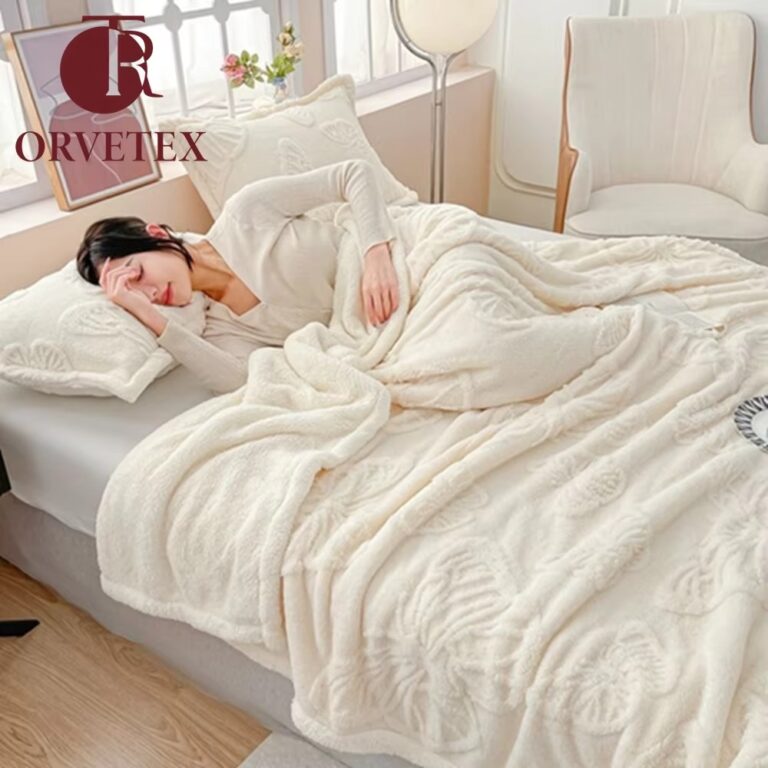
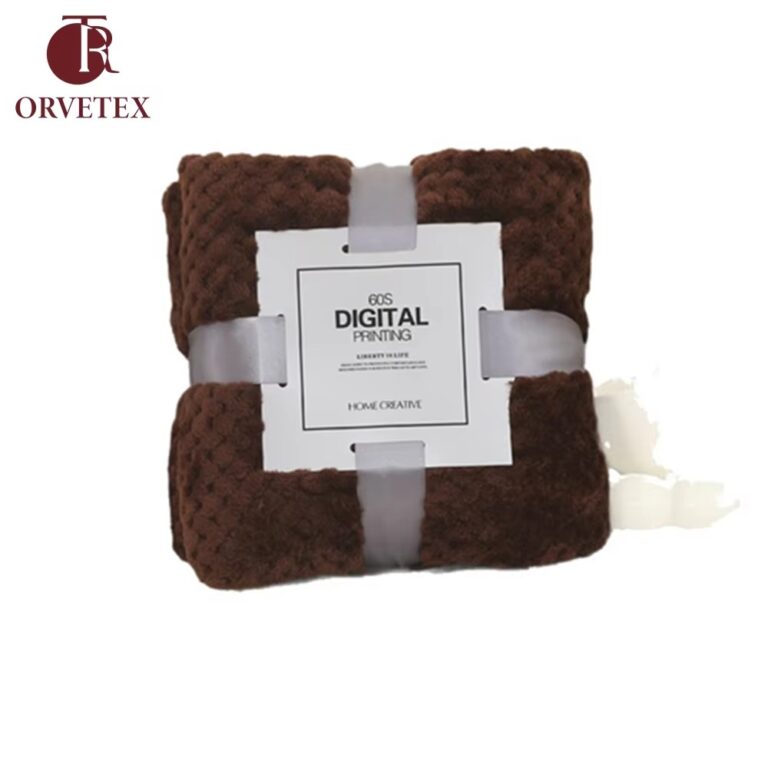
1. What Is Custom Blanket Manufacturing?
Custom blanket manufacturing means producing blankets based on a buyer’s specific requirements instead of selling standard factory products.
A professional custom blanket manufacturer can support:
- Custom materials
- Custom sizes
- Custom colors
- Custom patterns
- Custom labels
- Custom packaging
- Custom product development
This allows brands to create products that match their market positioning.
For example:
A premium home textile brand may choose a thicker sherpa fleece blanket with luxury packaging.
An online retailer may develop seasonal printed fleece blankets for holiday sales.
A hotel supplier may require durable blankets with specific washing performance.
Different customers have different needs, and customization helps suppliers create suitable solutions.
2. Why Brands Choose OEM Blanket Manufacturing
Build Product Differentiation
The biggest advantage of OEM manufacturing is creating unique products.
In highly competitive markets, many sellers offer similar blankets. Competing only through price often leads to lower profit margins.
Customized blankets allow brands to create:
- Exclusive designs
- Unique product collections
- Brand-specific packaging
- Special fabric combinations
This helps companies develop stronger brand recognition.
Improve Profit Margins
Private label and customized products usually have higher value compared with generic products.
When customers recognize a unique design or brand identity, businesses can avoid direct price competition.
A customized blanket can become part of a complete product strategy rather than just another commodity.
Respond Faster to Market Trends
Consumer preferences change quickly.
Popular trends include:
- Minimalist home decoration
- Sustainable lifestyle products
- Seasonal designs
- Personalized home accessories
- Premium soft-touch fabrics
OEM manufacturers allow brands to develop new products according to market demand.
Instead of waiting for available factory stock, businesses can create products based on customer insights.
3. Key Customization Options for Blankets
Fabric and Material Selection
The material determines the blanket’s softness, warmth, appearance, and market positioning.
Common options include:
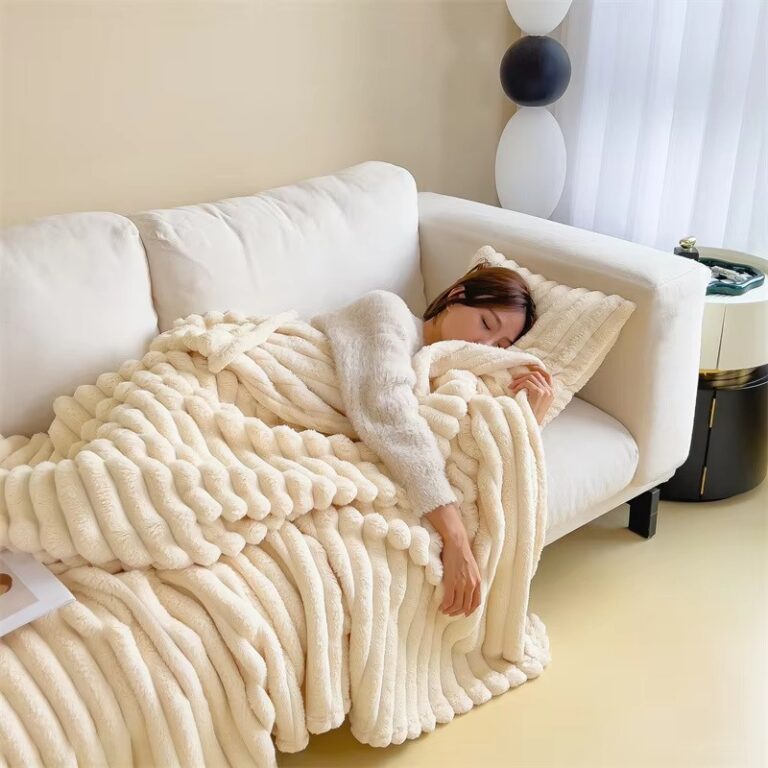
Flannel Fleece
Advantages:
- Soft touch
- Lightweight
- Cost-effective
- Suitable for large retail programs
Sherpa Fleece
Advantages:
- Premium appearance
- Higher warmth
- Double-sided comfort
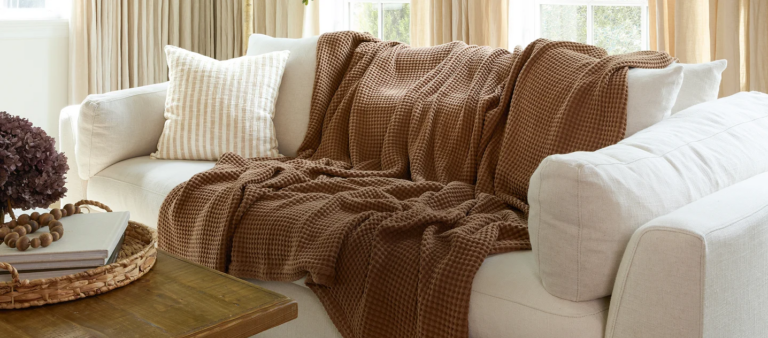
Other Custom Fabrics
Manufacturers can also develop products using different fabric structures according to customer requirements.
Size Customization
Different markets require different blanket sizes.
Common sizes include:
- Baby blanket
- Throw blanket
- Twin blanket
- Queen blanket
- King blanket
Custom sizing allows brands to match local market preferences.
Design and Color Customization
Brands can customize blankets through:
- Solid colors
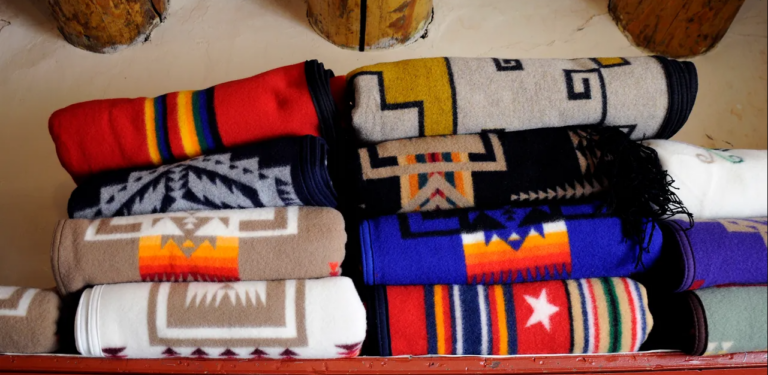
- Jacquard patterns
- Digital printing
- Seasonal themes
- Brand-specific designs
For retailers and online sellers, unique designs are important for improving product visibility.
Private Label and Packaging
Brand presentation matters in today’s market.
OEM manufacturers can support:
- Woven labels
- Printed labels
- Hang tags
- Gift boxes
- Retail packaging
- Shipping packaging
Professional packaging helps products create a stronger first impression.
4. The Custom Blanket Manufacturing Process
A reliable OEM supplier usually follows a structured production process.
Step 1: Requirement Discussion
The manufacturer confirms:
- Product concept
- Material requirements
- Size
- Quantity
- Target market
- Packaging needs
Step 2: Sample Development
Before mass production, samples are created for approval.
Sample evaluation usually includes:
- Fabric feeling
- Color accuracy
- Size measurement
- Sewing quality
- Packaging design
Step 3: Mass Production
After sample confirmation, production begins.
The process normally includes:
- Fabric preparation
- Cutting
- Sewing
- Edge finishing
- Inspection
- Packing
Step 4: Quality Inspection and Shipment
Before shipment, professional factories conduct final inspections to ensure:
- Product consistency
- Correct quantity
- Proper packaging
- Customer specifications
5. How to Choose the Right Custom Blanket Manufacturer
When selecting an OEM partner, businesses should evaluate several factors.
Manufacturing Experience
Experienced manufacturers understand:
- Fabric performance
- Production challenges
- International quality requirements
Product Development Ability
A good partner should provide suggestions instead of only following instructions.
Production Stability
Reliable production capacity ensures:
- On-time delivery
- Stable quality
- Long-term cooperation
Communication Efficiency
Clear communication reduces mistakes during customization.
Why Partner with an OEM Blanket Manufacturer?
Working directly with a professional blanket manufacturer provides businesses with:
Product Flexibility
Develop products according to market needs.
Cost Control
Reduce unnecessary middle costs through factory cooperation.
Faster Product Innovation
Launch new collections faster.
Long-Term Growth Support
Build a stable supply chain for future expansion.
FAQ About Custom Blanket Manufacturing
1. Can I create my own blanket design?
Yes. OEM manufacturers can produce blankets based on your designs, colors, patterns, and specifications.
2. What information is needed for a custom blanket quotation?
Usually required:
- Blanket size
- Material
- GSM requirement
- Quantity
- Design details
- Packaging requirements
3. Can small brands order custom blankets?
Yes. Many manufacturers provide flexible solutions for startup brands and growing businesses.
4. How long does custom blanket development take?
The timeline depends on design complexity, sample approval, and order quantity.
Conclusion
Custom blanket manufacturing gives brands more opportunities to create differentiated products and compete in the global home textile market.
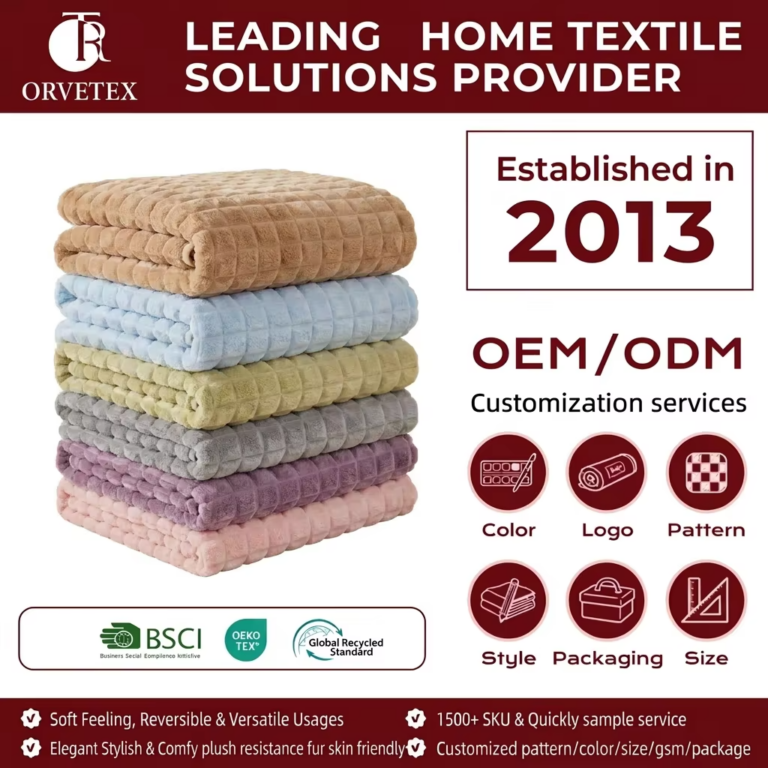
Through OEM and ODM cooperation, businesses can develop unique blankets with customized materials, designs, labels, and packaging.
For retailers, distributors, hotels, and online brands, choosing the right blanket manufacturer is not only about purchasing products—it is about building a stronger product strategy and a long-term supply chain partnership.